Urban Renaturalization Projects in Barcelona I
Barcelona Is Committed to Repurposing Roads and Paved Urban Spaces to Increase Green Surface and Prioritize Pedestrians
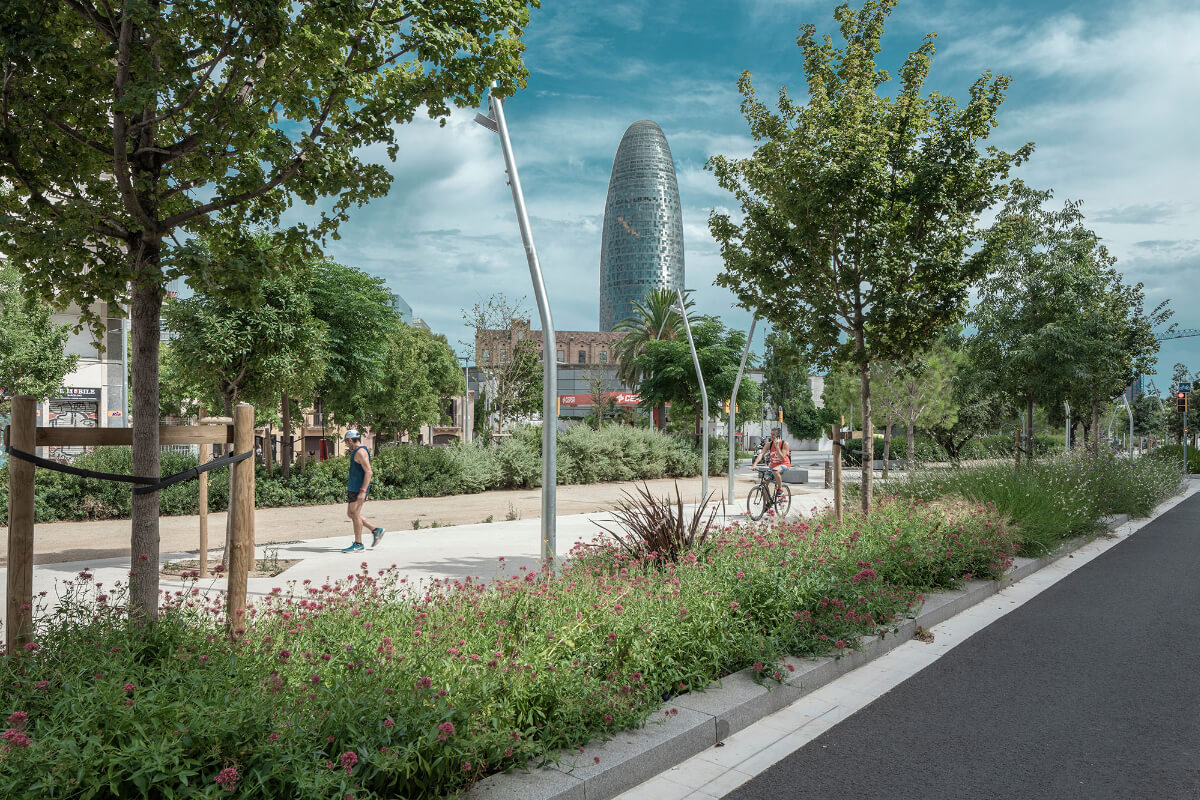
New Meridiana Promenade, © Antonio Navarro Wijkmark
Barcelona, an Urban and Landscape Laboratory Rooted in History
Barcelona is recognized as an international benchmark for its architecture, but also for the urban and landscape initiatives that have progressively transformed the city since the mid-19th century. The succession of initiatives over time should be understood as the result of a constant quest for improvement, renewal, and even reinvention of the urban model.
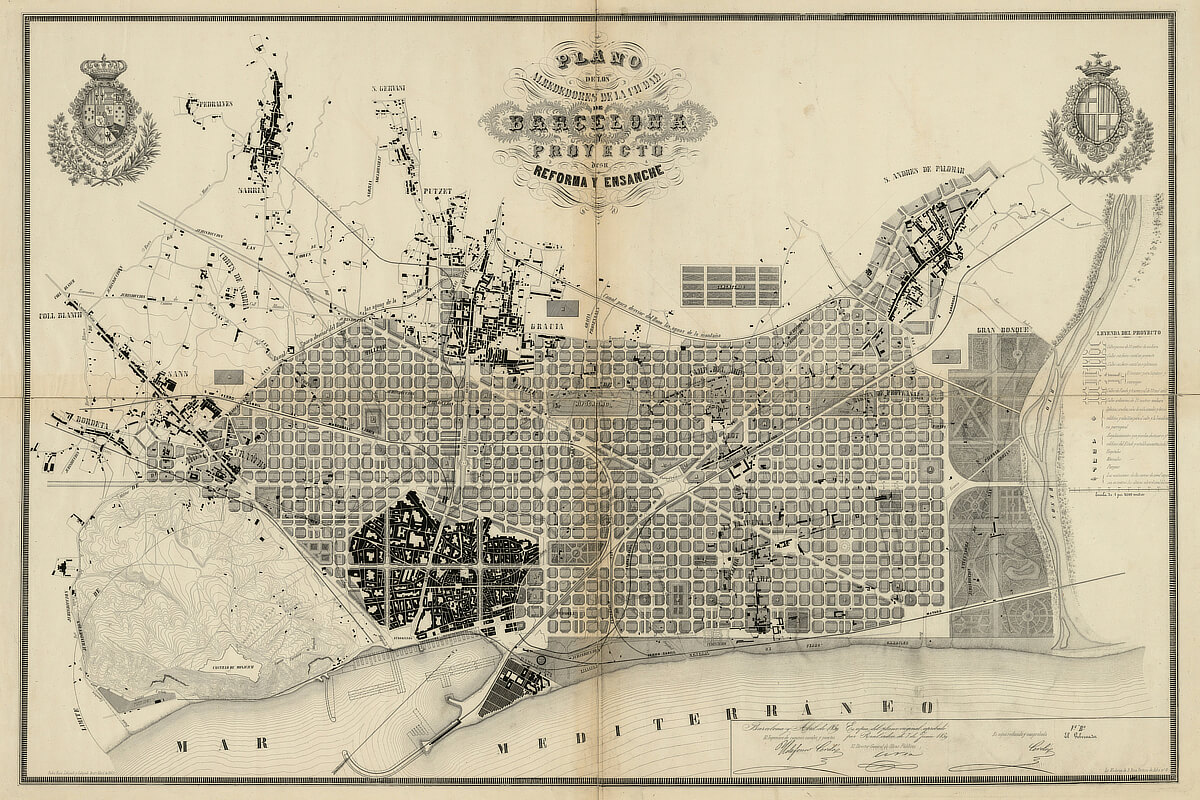
In fact, we can trace the first attempt to integrate nature as an essential part of the city back to Ildefons Cerdà’s Eixample (1859). The renowned engineer’s initial plan was to turn Barcelona into a garden city, an idea hindered by economic and political interests that prevailed over technical and theoretical criteria.
It was not until the construction of the Parc de la Ciutadella (1881) that the city gained its first major public park. Although Josep Fontseré’s design was not fully implemented, it is worth noting that he sought to integrate the park into the city’s urban fabric.
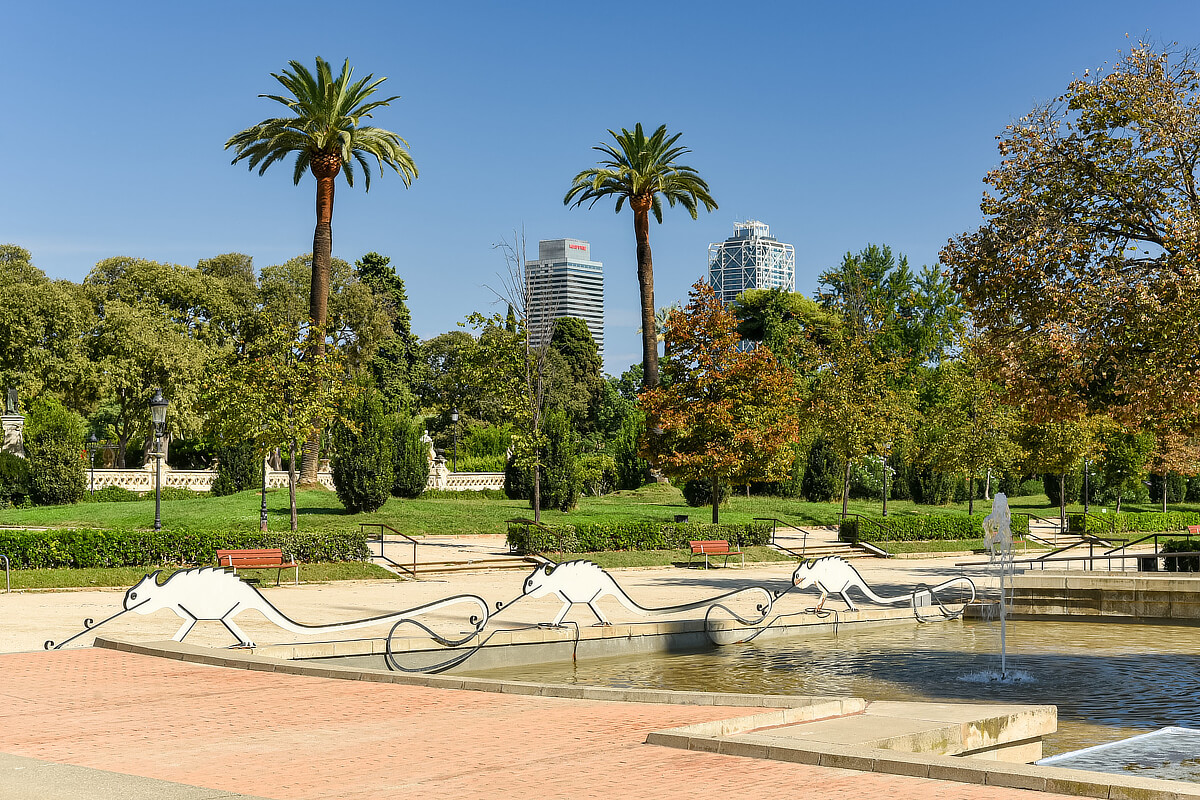
Parc de la Ciutadella, © Jorge Franganillo, licensed under CC BY 2.0
Landscape Architecture in Barcelona in the Early 20th Century
The early decades of the 20th century were a prolific period for landscape design. First and foremost, we must mention Antoni Gaudí’s Parc Güell (1914); although being in fact a failed urban development project, it ultimately became an indispensable landmark due to its unusual integration of architecture and nature, notably featuring pedestrian viaducts with organic and rocky qualities.
This foundational period reaches its peak with the numerous projects in Barcelona by the French landscape architect Jean-Claude Nicolas Forestier, carried out in collaboration with Nicolau Rubió i Tudurí. His contribution is distinguished by an integrative vision on an urban scale, respect for the site, and the introduction of some new plant species, all while maintaining the Mediterranean character. Among his most accomplished gardens are those of Miramar (1923) and Laribal (1924), both in Montjuic.
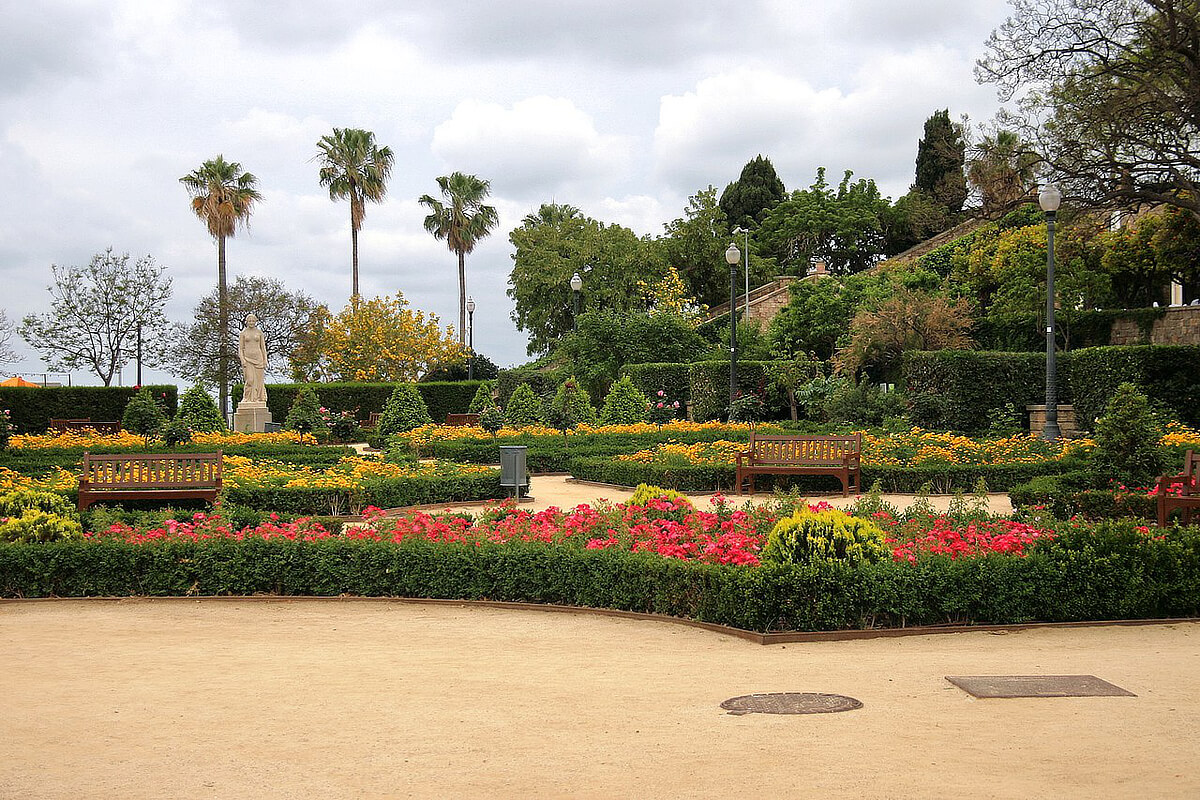
Jardins de Miramar, © Jorge Franganillo, licensed under CC BY 3.0
The Path to the Renaturalization of Barcelona
Following a period marked by the proliferation of paved plazas, in recent decades the paradigm has shifted back toward the predominance of green spaces and has been reinforced by the adoption of principles such as sustainability, renaturalization, and Sustainable Urban Drainage Systems (SUDS).
The concept of renaturalization refers to a transformation that seeks to restore ecosystems with structural approach; however, it is not limited to increasing green spaces but also addresses aspects such as water management, biodiversity, and social inclusion. Furthermore, its scope of action is not limited to urban environments but extends to the regional level, as seen in the example of the Besós River Park (2004) by Bernardo de Solá.
SUDS, on the other hand, are a set of strategies aimed at regenerating the natural water cycle, which is often disrupted in urban environments. They include permeable pavements, water filtration and collection systems, retention ponds, green roofs, and rain gardens.
These new approaches are evident in initiatives such as the Superblocks and Green Axes or in the launch of the Plan Natura Barcelona 2021-2030. This municipal plan outlines the city’s urban nature and biodiversity policies for the coming years. Its main objective is to consolidate the concept of green infrastructure by creating new parks, strengthening the connections between existing ones, and ensuring their accessibility and adaptability.
Factors such as ecological connectivity, urban and citizen’s health, the water cycle, and climate change are taken into account as well.
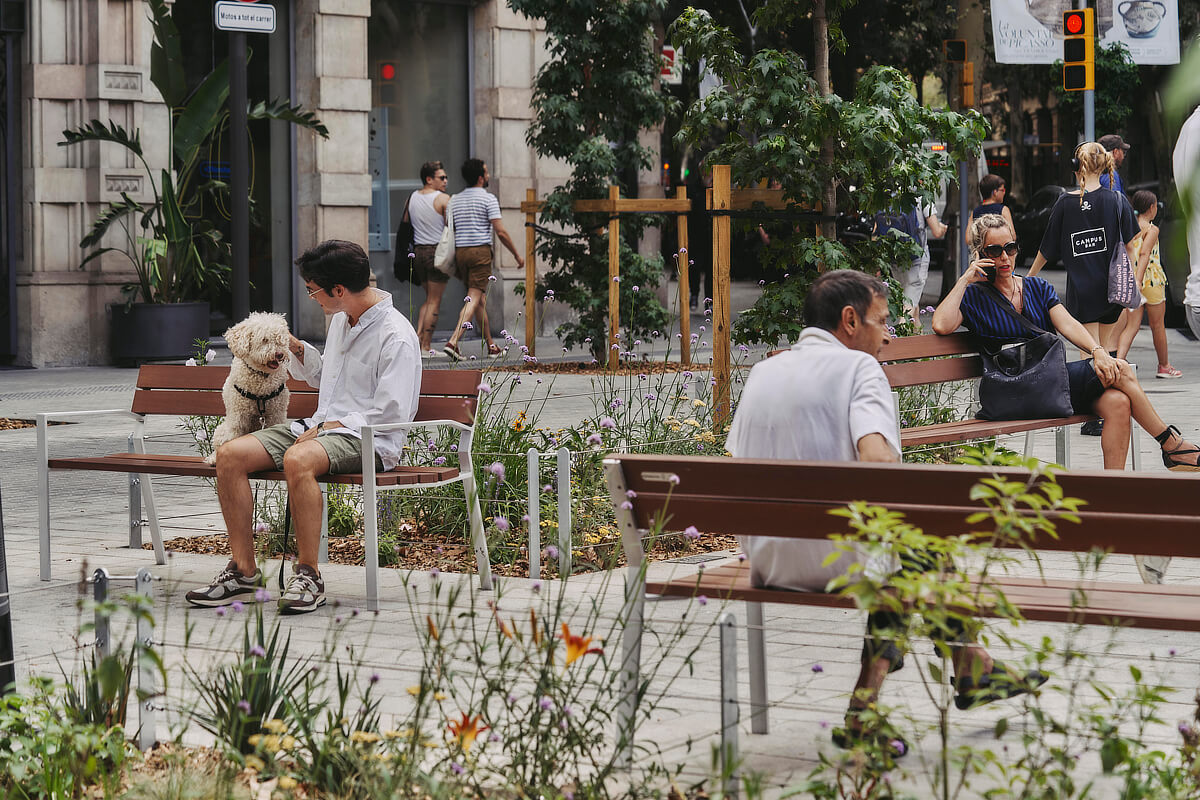
Consell de Cent Green Axis, © Claudia García Maurino
Reimagining Barcelona’s Street Network
Among the most drastic urban changes that have taken place in Barcelona in recent decades, the transformation of roadways into pedestrian spaces stands out. This reinvention of urban thoroughfares reflects a new paradigm that signals a shift in priorities in the city’s planning and organization.
Major projects under this framework aim to place citizens —and pedestrians in particular— as the top priority, while incorporating sustainability as a complementary goal.
The first thing that comes to mind when considering this approach is the Green Axes: proposals to renaturalize entire streets, creating an interconnected network of linear parks. But there are also other proposals, including earlier ones, in which parts of the city originally designed primarily for motorized vehicle traffic have been transformed in surprising ways. This is the case with certain sections of the Ronda de Dalt, which are partially or entirely covered by pedestrian walkways, plazas, and even public buildings.
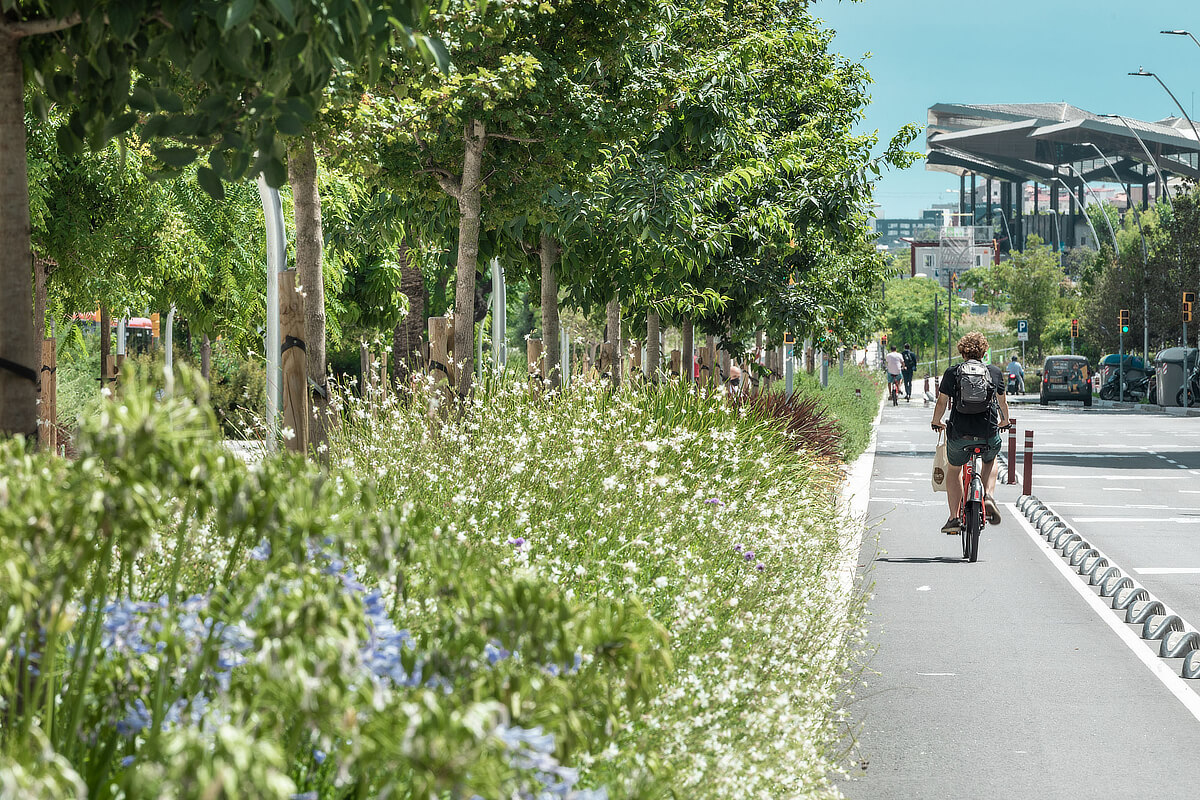
New Meridiana Promenade, © Antonio Navarro Wijkmark
The Gardens of the Rambla de Sants (2017) by Sergi Godia and Ana Molino
A particularly ambitious example is the Rambla de Sants Gardens (2017) by Sergi Godia and Ana Molino. This project is more complex than similar ones due to the nature of the infrastructure required.
The goal of this undertaking was to cover a heavily used railway line in order to reverse its effect as an urban barrier. To achieve this, a bridge-like structure was built with massive concrete trusses, enclosed by glass panels and topped by an elevated park that increases green space and improves the local ecosystem.
The landscaped area varies in width, stretches 720 meters in length, and is home to a variety of trees and plants, primarily native species. A series of ramps, stairs, and elevators enhance connectivity within the urban fabric on both sides of the tracks.
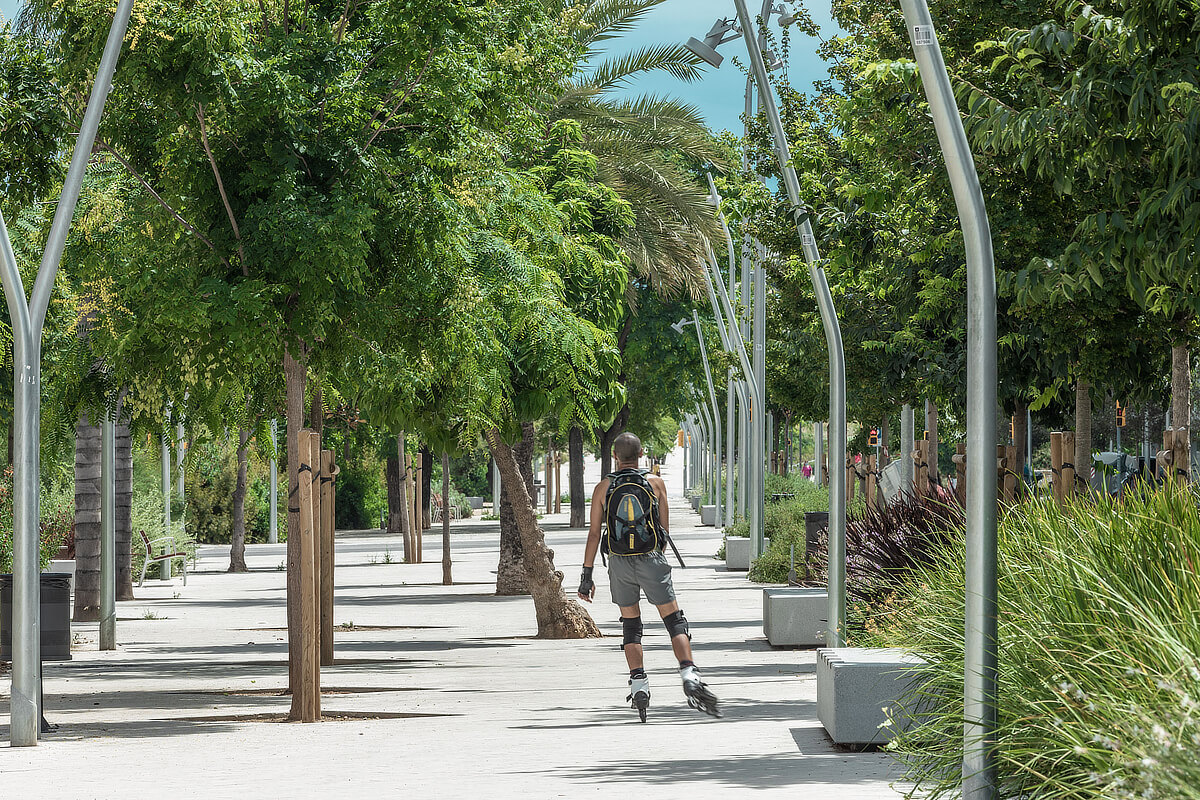
New Meridiana Promenade, © Antonio Navarro Wijkmark
The Meridiana Promenade (2019) by Batlleiroig Arquitectura
Another unique case, that doesn’t quite fit the Green Axes model, is the redesign of the Meridiana Avenue. A space that until recently was perceived as an urban highway, with countless lanes and total priority for cars; it could have been considered one of the city’s most hostile urban environments.
This has been gradually changing in recent years, and although construction is still underway, the section known as Paseo de la Meridiana, adjacent to Plaça de les Glòries, has already taken on its final form.
The project by Batlleiroig Arquitectura addresses the constraints posed by the underground infrastructure and reclaims most of the avenue for pedestrians, without completely interrupting motorized traffic, which is reduced to two lanes in each direction.
The coexistence of cars and pedestrians explains why the vegetation along the central promenade is concentrated on the sides, acting as a filter. The pedestrian area, paved mainly with concrete tiles, is thus flanked by a combination of herbaceous plants, shrubs, and trees. A technical subsurface system allows for the collection of rainwater, which is then used for irrigation.
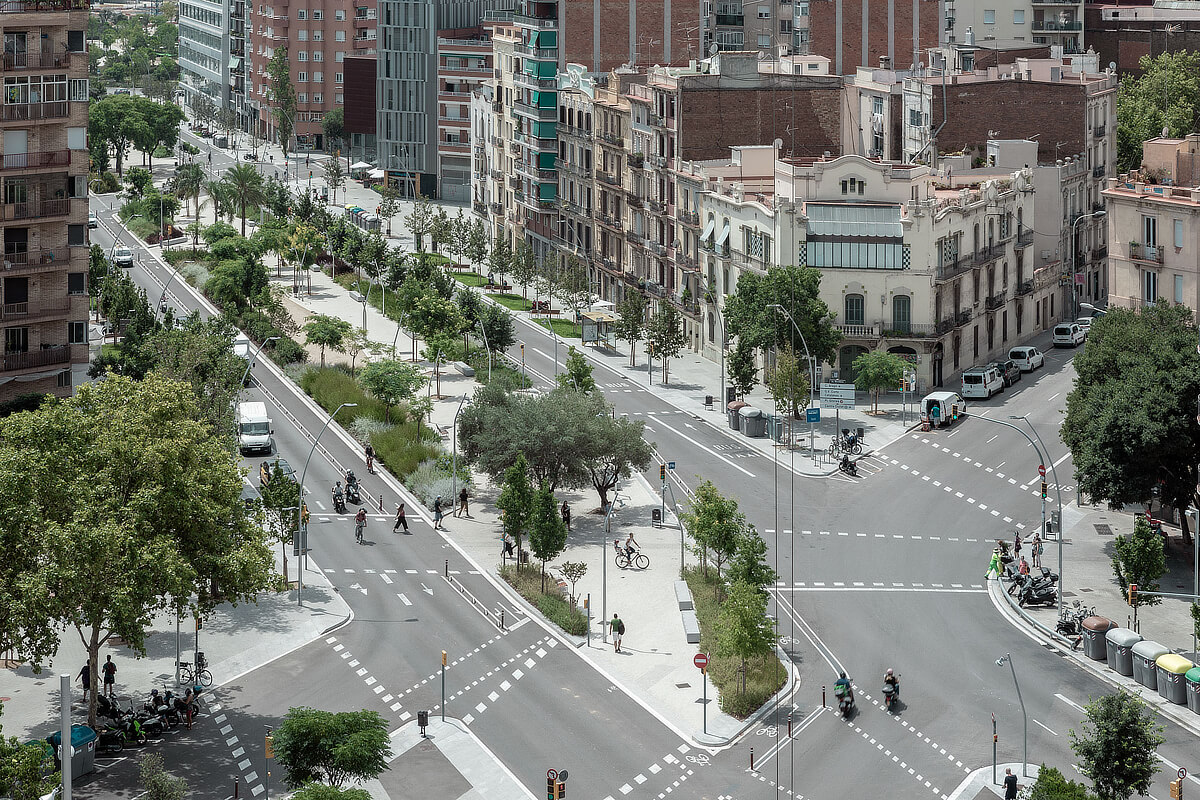
New Meridiana Promenade, © Antonio Navarro Wijkmark
Cristóbal Moura’s Green Axis (2019) by the Instituto Municipal de Urbanismo
Among the first completed Green Axes is the Cristóbal Moura one (2019), designed by the Municipal Institute of Urban Planning in the Poblenou neighborhood. In this prototype, the new green elements are concentrated in a 26-meter-wide landscaped strip that occupies the center of the street and is framed by sidewalks paved with concrete tiles.
Although bike lanes and a restricted-use car lane are included, absolute priority is given to pedestrians. The design is based on curved elements, with undulating paths, lobular ponds, circular planters, and cylindrical seats.
All the surfaces in this area are permeable to restore the natural water cycle, using materials such as stabilized sand, soil, and cobblestone. The application of SUDS explains the choice of materials and, in part, the presence of slopes that channel rainwater toward retention ponds, while also helping to define spaces for people to linger.
The floodable flower beds, planted with shrubs, ceiba trees, jacarandas, and ash trees, complete the process of rainwater collection and infiltration.
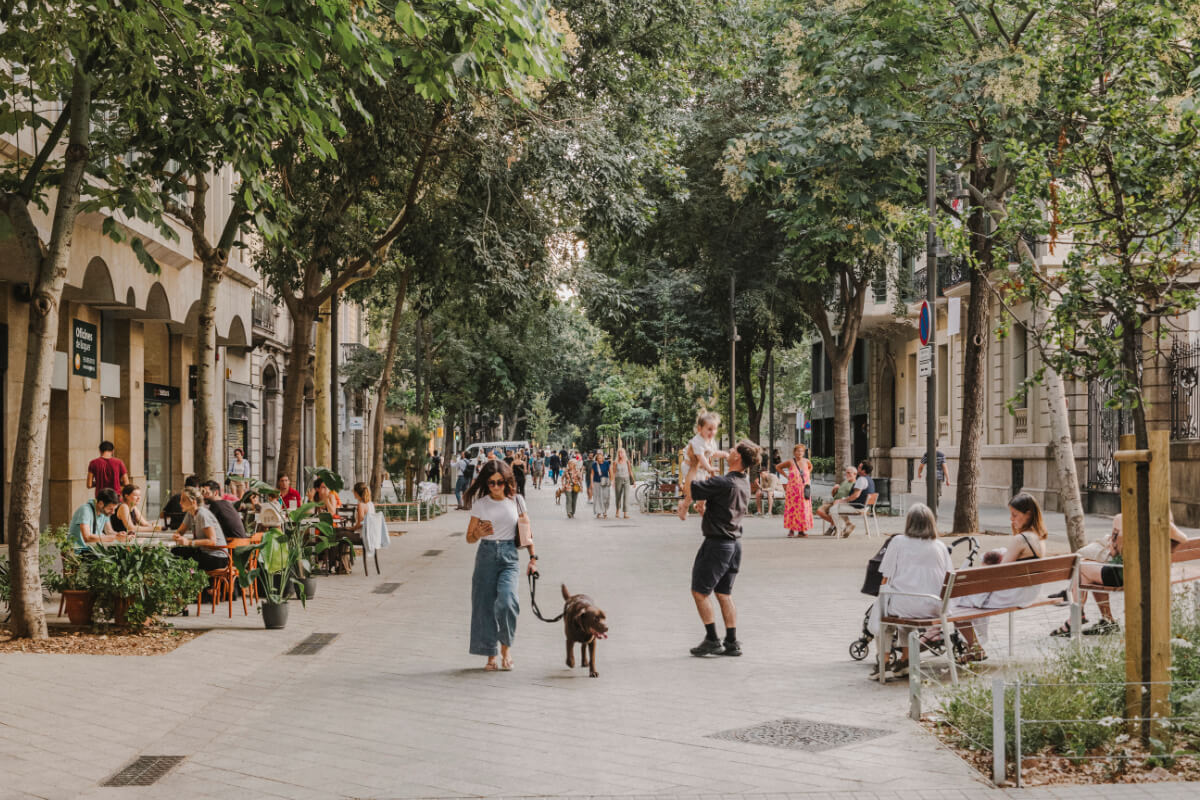
Consell de Cent Green Axis, © Marta Vidal
Consell de Cent’s Green Axis (2023) by Cierto Estudio + B67 Palomeras Arquitectos
Among the Green Axes already implemented, Consell de Cent stands out as one of the longest and, consequently, with the greatest urban, social, and environmental impact. Its design is the work of Cierto Estudio and B67 Palomeras Arquitectos and is based on principles of sustainability and integration.
The roadway gives way to a single continuous sidewalk interrupted only by polygonal flower beds, whose design and layout create small plazas inspired by the chamfered intersections of the Eixample. The linear design thus adapts to the urban context and contrasts, for example, with that seen in Cristóbal Moura.
For functional reasons, car access is not eliminated but is restricted to residents and service vehicles, which poses a significant challenge when attempting to reconcile commercial activities with public social interaction.
The pavements incorporate drainage surfaces and permeable joints that facilitate the collection and infiltration of rainwater. In addition to the existing trees, some new ones are being planted, along with herbaceous plants and shrubs, increasing species diversity while remaining within the framework of a Mediterranean ecosystem.
The street furniture consists of recognizable pieces that are familiar to users, who are ultimately the reason for the renovation.
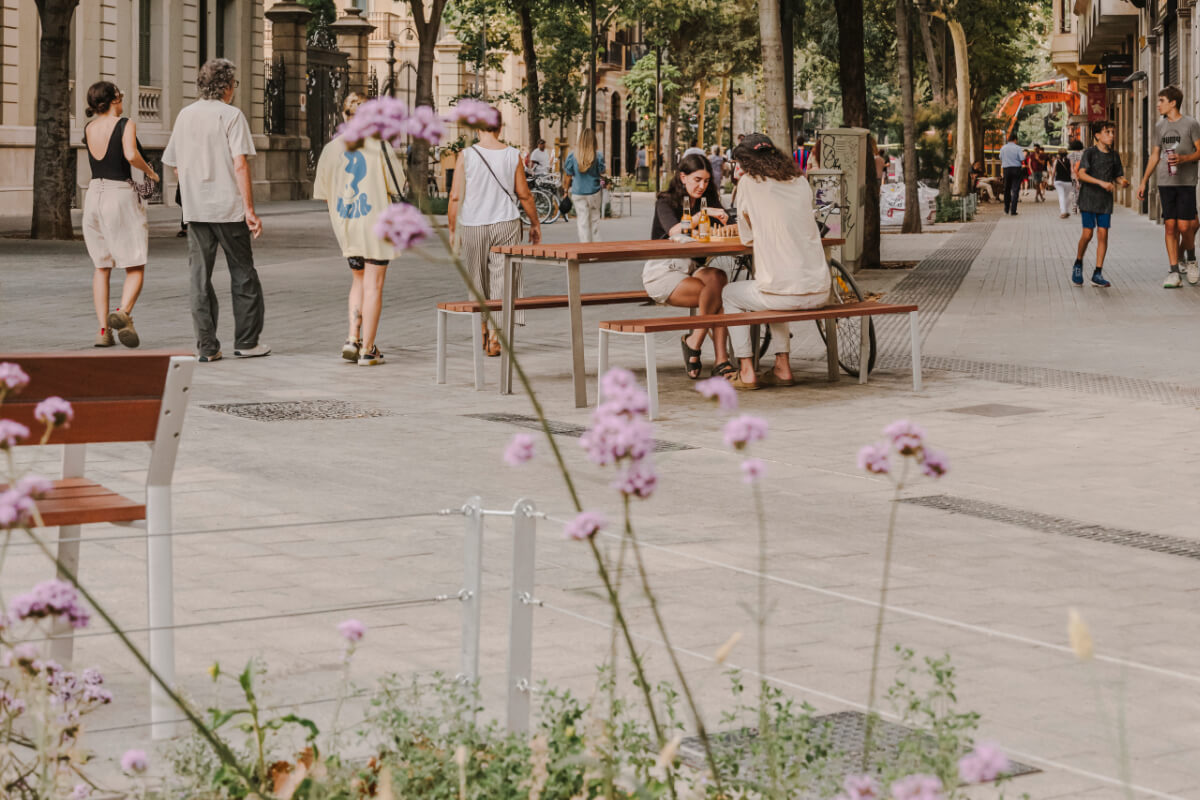
Consell de Cent Green Axis, © Marta Vidal
Nature, Mobility, and Public Space: The Challenge of Comprehensive Transformation
Barcelona’s public spaces are undergoing constant renewal in line with a new urban planning model centered on nature and people, which views the city as an ecosystem. A comprehensive approach is key: if more green spaces and pedestrian areas are planned, public transportation systems must compensate for the reduction in lanes dedicated to private vehicles.
This naturally includes urban bicycle services, and metropolitan bus and train networks, which brings us to the major unresolved issue: the commuter rail system. Let us hope that the recent crisis will finally spur significant changes in this area, even if a solution to the problem is not achieved in the short term.
This situation, however, must under no circumstances lead us to question the renaturalization objectives proposed by the City Council, which are fundamental to Barcelona’s urban sustainability for the future. It is important to be aware of the need to create urban ecosystems with a comprehensive approach and to ensure that proposals are not limited to isolated interventions.
It is equally crucial that the actions undertaken be adaptable and flexible, which will increase their chances of success in the long term and from the citizens’ perspective. In a second installment of this blog, we will continue analyzing this topic and discuss additional projects.
Text: Pedro Capriata
BIBLIOGRAPHY
Ajuntament de Barcelona (2021). Guia Tècnica per al disseny de sistemas de drenatge urbà sostenible.
https://share.google/rXwfQ6CXfzm6a8rq5
Ajuntament de Barcelona (2021). Pla Natura Barcelona 2021-2030.
https://share.google/BjbNIzFKnAlB5zkk5
Batlleiroig Arquitectura (s.f.).
https://www.batlleiroig.com/
Batlleiroig (2022). Fusionando Ciudad y Naturaleza. Actar.
Capriata, P. (2023) Las Supermanzanas y los ejes verdes de Barcelona, un modelo de ciudad más sostenible. Guiding Architects Barcelona.
https://www.gabarcelona.com/es/blog/supermanzanas/
Centre Obert d’Arquitectura (s.f.) ArquitecturaCatalana.Cat.
https://www.arquitecturacatalana.cat/es
Cierto Estudio (s.f.) Superilles – Eixos Verds.
https://ciertoestudio.com/Superilles-Eixos-Verds
Gehl, J. (2006). La humanización del espacio urbano. Editorial Reverté.
Gkoltsioufla, K. (2022). Reconnecting with nature: Landscape Architecture and Nature based solutions. IFLA Europe.
https://share.google/VxDlexqhnITBmJQE3
Jacobs, J. (2011). Muerte y vida de las grandes ciudades. Capitán Swing Libros.
Pujalte, S. (2021). Plan Natura Barcelona, hacia un 2030 más verde. Spanish-architects.com.
https://spanish-architects.com/es/architecture-news/destacados/plan-natura-barcelona-hacia-un-2030-mas-verde
Rueda, S. (2017) Ecosystemic urbanism: a way to make cities more sustainable. Barcelona Metròpolis, Num 102.
https://www.barcelona.cat/metropolis/sites/default/files/revistes/bm102baixa.pdf
Urban Renaturalization Projects in Barcelona I
Barcelona Is Committed to Repurposing Roads and Paved Urban Spaces to Increase Green Surface and Prioritize Pedestrians
New Meridiana Promenade, © Antonio Navarro Wijkmark
Barcelona, an Urban and Landscape Laboratory Rooted in History
Barcelona is recognized as an international benchmark for its architecture, but also for the urban and landscape initiatives that have progressively transformed the city since the mid-19th century. The succession of initiatives over time should be understood as the result of a constant quest for improvement, renewal, and even reinvention of the urban model.
In fact, we can trace the first attempt to integrate nature as an essential part of the city back to Ildefons Cerdà’s Eixample (1859). The renowned engineer’s initial plan was to turn Barcelona into a garden city, an idea hindered by economic and political interests that prevailed over technical and theoretical criteria.
It was not until the construction of the Parc de la Ciutadella (1881) that the city gained its first major public park. Although Josep Fontseré’s design was not fully implemented, it is worth noting that he sought to integrate the park into the city’s urban fabric.
Parc de la Ciutadella, © Jorge Franganillo, licensed under CC BY 2.0
Landscape Architecture in Barcelona in the Early 20th Century
The early decades of the 20th century were a prolific period for landscape design. First and foremost, we must mention Antoni Gaudí’s Parc Güell (1914); although being in fact a failed urban development project, it ultimately became an indispensable landmark due to its unusual integration of architecture and nature, notably featuring pedestrian viaducts with organic and rocky qualities.
This foundational period reaches its peak with the numerous projects in Barcelona by the French landscape architect Jean-Claude Nicolas Forestier, carried out in collaboration with Nicolau Rubió i Tudurí. His contribution is distinguished by an integrative vision on an urban scale, respect for the site, and the introduction of some new plant species, all while maintaining the Mediterranean character. Among his most accomplished gardens are those of Miramar (1923) and Laribal (1924), both in Montjuic.
Jardins de Miramar, © Jorge Franganillo, licensed under CC BY 3.0
The Path to the Renaturalization of Barcelona
Following a period marked by the proliferation of paved plazas, in recent decades the paradigm has shifted back toward the predominance of green spaces and has been reinforced by the adoption of principles such as sustainability, renaturalization, and Sustainable Urban Drainage Systems (SUDS).
The concept of renaturalization refers to a transformation that seeks to restore ecosystems with structural approach; however, it is not limited to increasing green spaces but also addresses aspects such as water management, biodiversity, and social inclusion. Furthermore, its scope of action is not limited to urban environments but extends to the regional level, as seen in the example of the Besós River Park (2004) by Bernardo de Solá.
SUDS, on the other hand, are a set of strategies aimed at regenerating the natural water cycle, which is often disrupted in urban environments. They include permeable pavements, water filtration and collection systems, retention ponds, green roofs, and rain gardens.
These new approaches are evident in initiatives such as the Superblocks and Green Axes or in the launch of the Plan Natura Barcelona 2021-2030. This municipal plan outlines the city’s urban nature and biodiversity policies for the coming years. Its main objective is to consolidate the concept of green infrastructure by creating new parks, strengthening the connections between existing ones, and ensuring their accessibility and adaptability.
Factors such as ecological connectivity, urban and citizen’s health, the water cycle, and climate change are taken into account as well.
Consell de Cent Green Axis, © Claudia García Maurino
Reimagining Barcelona’s Street Network
Among the most drastic urban changes that have taken place in Barcelona in recent decades, the transformation of roadways into pedestrian spaces stands out. This reinvention of urban thoroughfares reflects a new paradigm that signals a shift in priorities in the city’s planning and organization.
Major projects under this framework aim to place citizens —and pedestrians in particular— as the top priority, while incorporating sustainability as a complementary goal.
The first thing that comes to mind when considering this approach is the Green Axes: proposals to renaturalize entire streets, creating an interconnected network of linear parks. But there are also other proposals, including earlier ones, in which parts of the city originally designed primarily for motorized vehicle traffic have been transformed in surprising ways. This is the case with certain sections of the Ronda de Dalt, which are partially or entirely covered by pedestrian walkways, plazas, and even public buildings.
New Meridiana Promenade, © Antonio Navarro Wijkmark
The Gardens of the Rambla de Sants (2017) by Sergi Godia and Ana Molino
A particularly ambitious example is the Rambla de Sants Gardens (2017) by Sergi Godia and Ana Molino. This project is more complex than similar ones due to the nature of the infrastructure required.
The goal of this undertaking was to cover a heavily used railway line in order to reverse its effect as an urban barrier. To achieve this, a bridge-like structure was built with massive concrete trusses, enclosed by glass panels and topped by an elevated park that increases green space and improves the local ecosystem.
The landscaped area varies in width, stretches 720 meters in length, and is home to a variety of trees and plants, primarily native species. A series of ramps, stairs, and elevators enhance connectivity within the urban fabric on both sides of the tracks.
New Meridiana Promenade, © Antonio Navarro Wijkmark
The Meridiana Promenade (2019) by Batlleiroig Arquitectura
Another unique case, that doesn’t quite fit the Green Axes model, is the redesign of the Meridiana Avenue. A space that until recently was perceived as an urban highway, with countless lanes and total priority for cars; it could have been considered one of the city’s most hostile urban environments.
This has been gradually changing in recent years, and although construction is still underway, the section known as Paseo de la Meridiana, adjacent to Plaça de les Glòries, has already taken on its final form.
The project by Batlleiroig Arquitectura addresses the constraints posed by the underground infrastructure and reclaims most of the avenue for pedestrians, without completely interrupting motorized traffic, which is reduced to two lanes in each direction.
The coexistence of cars and pedestrians explains why the vegetation along the central promenade is concentrated on the sides, acting as a filter. The pedestrian area, paved mainly with concrete tiles, is thus flanked by a combination of herbaceous plants, shrubs, and trees. A technical subsurface system allows for the collection of rainwater, which is then used for irrigation.
New Meridiana Promenade, © Antonio Navarro Wijkmark
Cristóbal Moura’s Green Axis (2019) by the Instituto Municipal de Urbanismo
Among the first completed Green Axes is the Cristóbal Moura one (2019), designed by the Municipal Institute of Urban Planning in the Poblenou neighborhood. In this prototype, the new green elements are concentrated in a 26-meter-wide landscaped strip that occupies the center of the street and is framed by sidewalks paved with concrete tiles.
Although bike lanes and a restricted-use car lane are included, absolute priority is given to pedestrians. The design is based on curved elements, with undulating paths, lobular ponds, circular planters, and cylindrical seats.
All the surfaces in this area are permeable to restore the natural water cycle, using materials such as stabilized sand, soil, and cobblestone. The application of SUDS explains the choice of materials and, in part, the presence of slopes that channel rainwater toward retention ponds, while also helping to define spaces for people to linger.
The floodable flower beds, planted with shrubs, ceiba trees, jacarandas, and ash trees, complete the process of rainwater collection and infiltration.
Consell de Cent Green Axis, © Marta Vidal
Consell de Cent’s Green Axis (2023) by Cierto Estudio + B67 Palomeras Arquitectos
Among the Green Axes already implemented, Consell de Cent stands out as one of the longest and, consequently, with the greatest urban, social, and environmental impact. Its design is the work of Cierto Estudio and B67 Palomeras Arquitectos and is based on principles of sustainability and integration.
The roadway gives way to a single continuous sidewalk interrupted only by polygonal flower beds, whose design and layout create small plazas inspired by the chamfered intersections of the Eixample. The linear design thus adapts to the urban context and contrasts, for example, with that seen in Cristóbal Moura.
For functional reasons, car access is not eliminated but is restricted to residents and service vehicles, which poses a significant challenge when attempting to reconcile commercial activities with public social interaction.
The pavements incorporate drainage surfaces and permeable joints that facilitate the collection and infiltration of rainwater. In addition to the existing trees, some new ones are being planted, along with herbaceous plants and shrubs, increasing species diversity while remaining within the framework of a Mediterranean ecosystem.
The street furniture consists of recognizable pieces that are familiar to users, who are ultimately the reason for the renovation.
Consell de Cent Green Axis, © Marta Vidal
Nature, Mobility, and Public Space: The Challenge of Comprehensive Transformation
Barcelona’s public spaces are undergoing constant renewal in line with a new urban planning model centered on nature and people, which views the city as an ecosystem. A comprehensive approach is key: if more green spaces and pedestrian areas are planned, public transportation systems must compensate for the reduction in lanes dedicated to private vehicles.
This naturally includes urban bicycle services, and metropolitan bus and train networks, which brings us to the major unresolved issue: the commuter rail system. Let us hope that the recent crisis will finally spur significant changes in this area, even if a solution to the problem is not achieved in the short term.
This situation, however, must under no circumstances lead us to question the renaturalization objectives proposed by the City Council, which are fundamental to Barcelona’s urban sustainability for the future. It is important to be aware of the need to create urban ecosystems with a comprehensive approach and to ensure that proposals are not limited to isolated interventions.
It is equally crucial that the actions undertaken be adaptable and flexible, which will increase their chances of success in the long term and from the citizens’ perspective. In a second installment of this blog, we will continue analyzing this topic and discuss additional projects.
Text: Pedro Capriata
BIBLIOGRAPHY
Ajuntament de Barcelona (2021). Guia Tècnica per al disseny de sistemas de drenatge urbà sostenible.
https://share.google/rXwfQ6CXfzm6a8rq5
Ajuntament de Barcelona (2021). Pla Natura Barcelona 2021-2030.
https://share.google/BjbNIzFKnAlB5zkk5
Batlleiroig Arquitectura (s.f.).
https://www.batlleiroig.com/
Batlleiroig (2022). Fusionando Ciudad y Naturaleza. Actar.
Capriata, P. (2023) Las Supermanzanas y los ejes verdes de Barcelona, un modelo de ciudad más sostenible. Guiding Architects Barcelona.
https://www.gabarcelona.com/es/blog/supermanzanas/
Centre Obert d’Arquitectura (s.f.) ArquitecturaCatalana.Cat.
https://www.arquitecturacatalana.cat/es
Cierto Estudio (s.f.) Superilles – Eixos Verds.
https://ciertoestudio.com/Superilles-Eixos-Verds
Gehl, J. (2006). La humanización del espacio urbano. Editorial Reverté.
Gkoltsioufla, K. (2022). Reconnecting with nature: Landscape Architecture and Nature based solutions. IFLA Europe.
https://share.google/VxDlexqhnITBmJQE3
Jacobs, J. (2011). Muerte y vida de las grandes ciudades. Capitán Swing Libros.
Pujalte, S. (2021). Plan Natura Barcelona, hacia un 2030 más verde. Spanish-architects.com.
https://spanish-architects.com/es/architecture-news/destacados/plan-natura-barcelona-hacia-un-2030-mas-verde
Rueda, S. (2017) Ecosystemic urbanism: a way to make cities more sustainable. Barcelona Metròpolis, Num 102.
https://www.barcelona.cat/metropolis/sites/default/files/revistes/bm102baixa.pdf
Related Posts
16.09.2026
The Urban Development Project That Defined Barcelona’s Identity.
30.06.2026
From a Landmark Public Library to Industrial Heritage Sites and FAD Award-Recognised Works.
16.06.2026
Several Projects Located in Barcelona Have Been Selected as Finalists for the FAD Architecture Awards.

11.05.2026
Barcelona Is Replacing Paved Areas Such as Intersections and Inner-Block Spaces With New Green Areas, Fostering Urban Ecological Regeneration.