Barcelona, World Capital of Architecture 2026
An Invitation to (Re)Discover the City and Its Architecture as the Main Protagonist
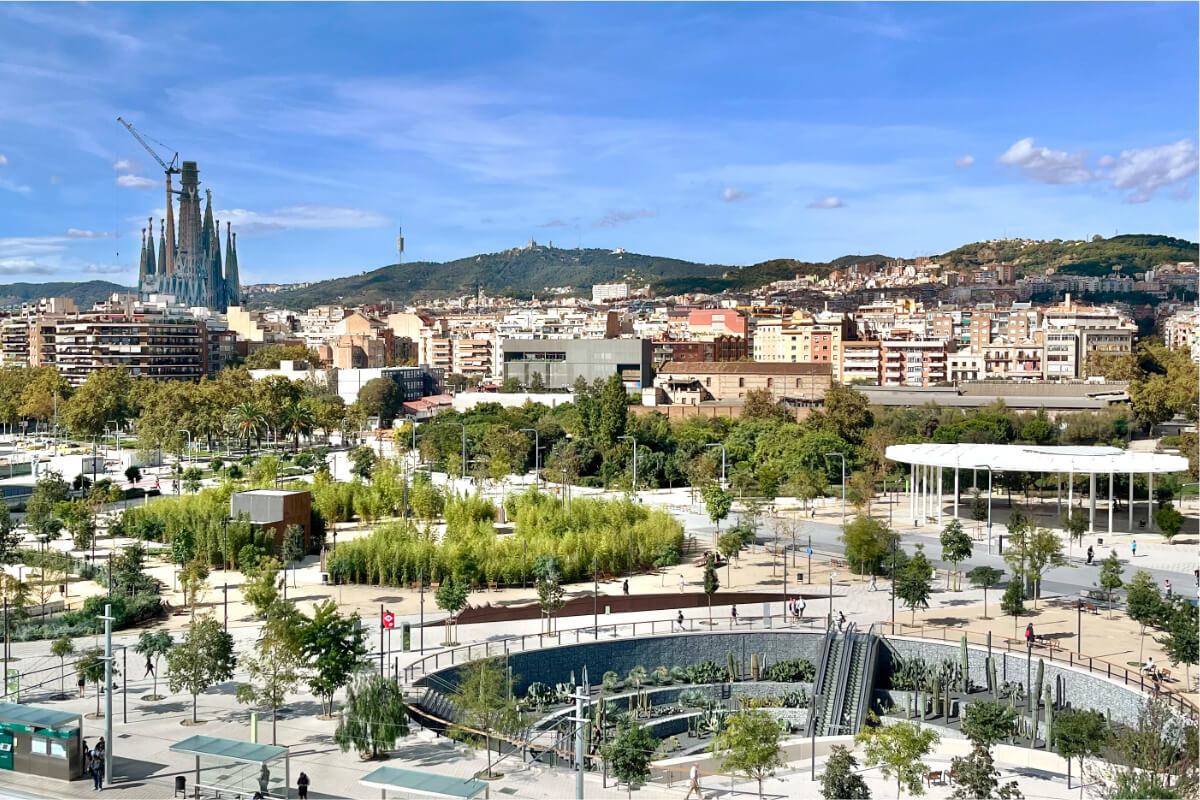
The redesigned Plaça de les Glòries, © GA Barcelona
In 2026, Barcelona positions itself as a global reference for architectural thought. The city not only invites us to admire its legacy, but also to reflect on how architecture, urban planning, and landscape design can confront the great urban, social, and environmental challenges of our time. UNESCO and the International Union of Architects (UIA) have named it World Capital of Architecture, recognizing both its history and its ability to reinvent itself without losing its identity.
This year also commemorates two historic milestones: the centenary of the death of Antoni Gaudí and the 150th anniversary of the passing of Ildefons Cerdà, whose Eixample Plan transformed the city and laid the foundations of modern urban planning.
From February 12 to December 13, Barcelona will become an open urban laboratory, with more than 1,500 activities that will transform streets, squares, and buildings into spaces for dialogue and exchange. Exhibitions, urban tours, workshops, and conferences will allow people to experience architecture firsthand, discovering how every corner of the city engages in a dialogue with its history and today’s challenges.
At Guiding Architects Barcelona, we will actively participate with debates and guided tours designed to connect historical Barcelona with its contemporary concerns. We will explore everything from the landmarks of Catalan rationalism to the renaturalization of public spaces, examining the sustainable transformation of industrial heritage, the role of libraries as community hubs, and the impact of the FAD Awards on contemporary urban life.
For visitors from abroad, being the World Capital of Architecture makes Barcelona the perfect opportunity to (re)discover a city that balances historical legacy, urban innovation, and an ecological vision for the future.
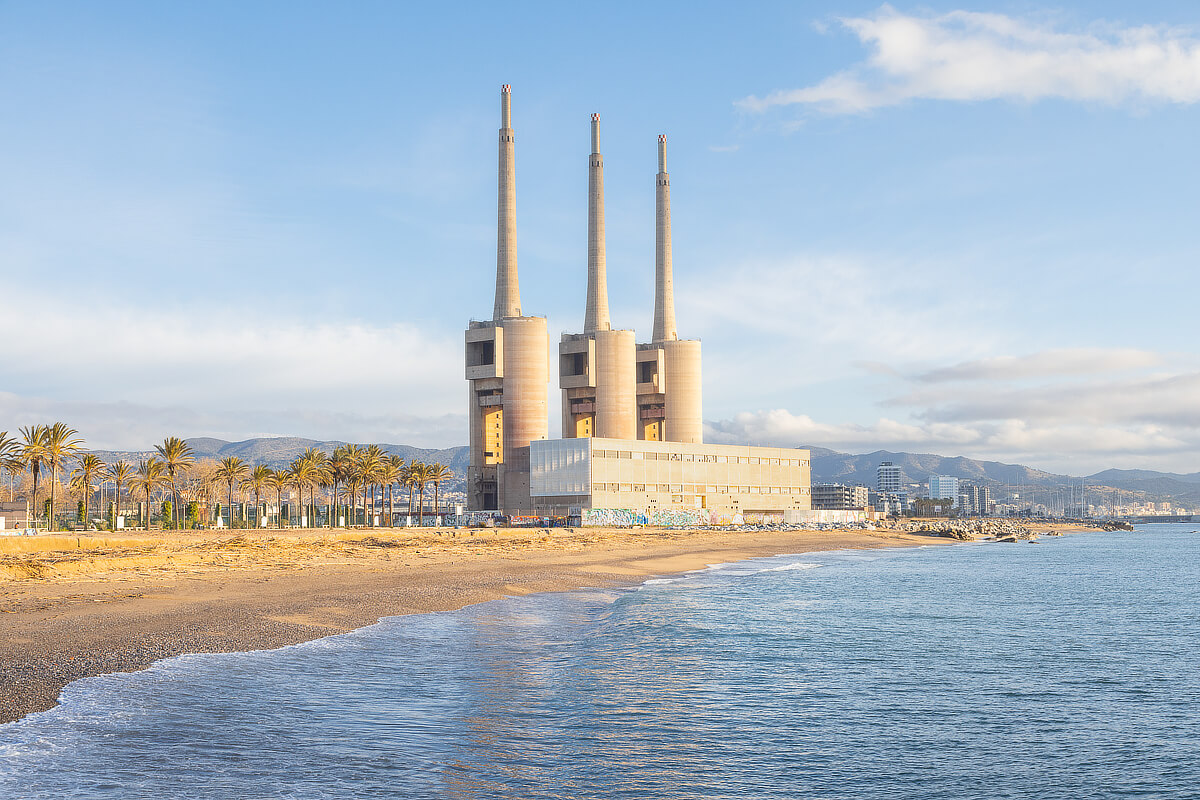
Les Tres Xemeneies of Sant Adrià de Besòs, © Manifesta 15 Barcelona Metropolitana – Arnau Rovira
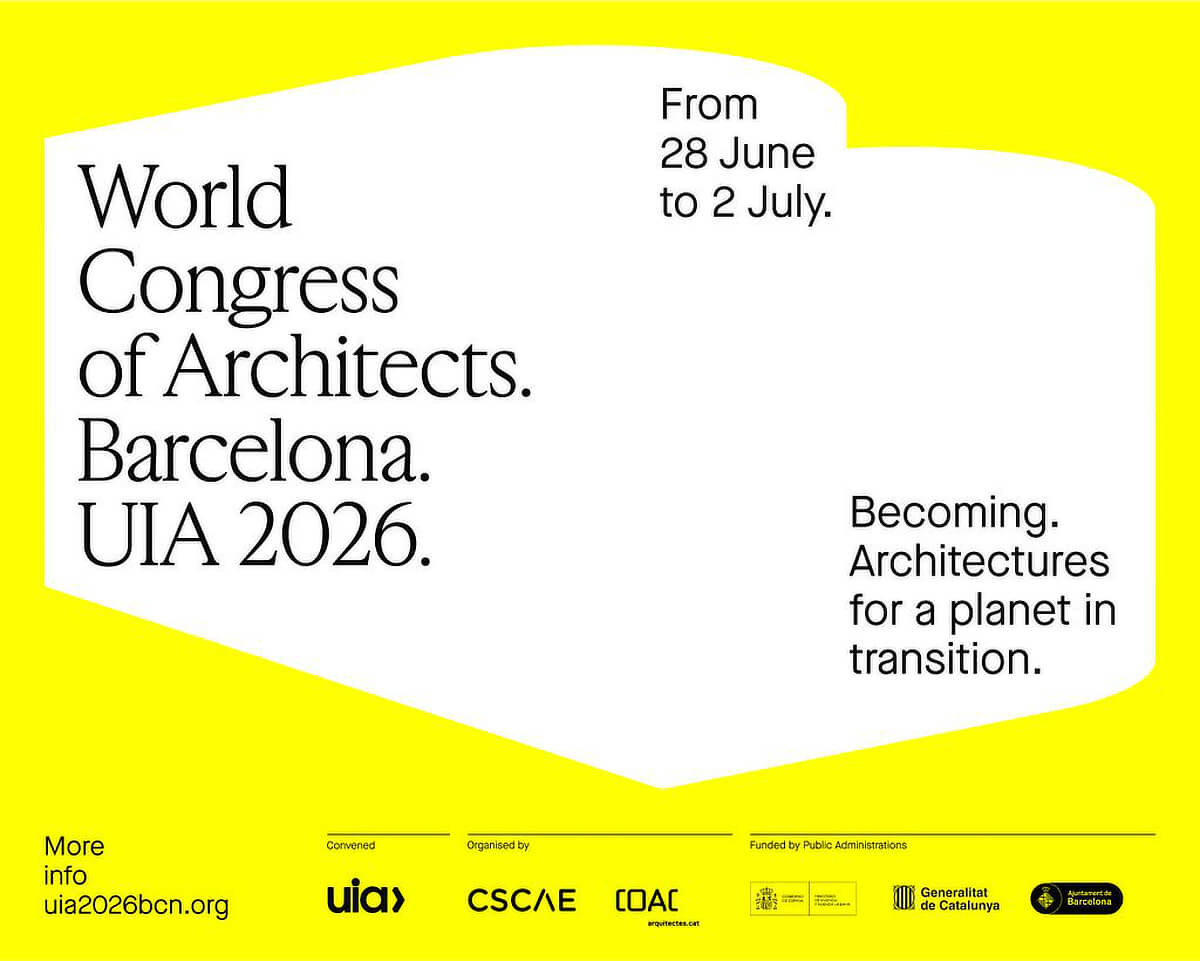
“Becoming. Architectures for a Planet in Transition” – UIA World Congress of Architecture 2026
One of the most anticipated events will be the UIA World Congress of Architecture, which will bring together architects and urban planners from around the world from June 28 to July 2 under the theme ‘Becoming. Architectures for a Planet in Transition.’ Around 10,000 professionals are expected to gather at two iconic venues: Les Tres Xemeneies of Sant Adrià de Besòs, a symbol of the post-industrial era, and the Disseny Hub Barcelona, in the renewed Plaça de les Glòries that Cerdà had envisioned as the city’s nerve center.
This duality reflects the spirit of the congress: uniting past and future, promoting environmental regeneration, and exploring new forms of coexistence. With this edition, Barcelona becomes the only city to host the UIA Congress twice, following the successful 1996 event, consolidating its role as a global reference for how we want to inhabit the planet.
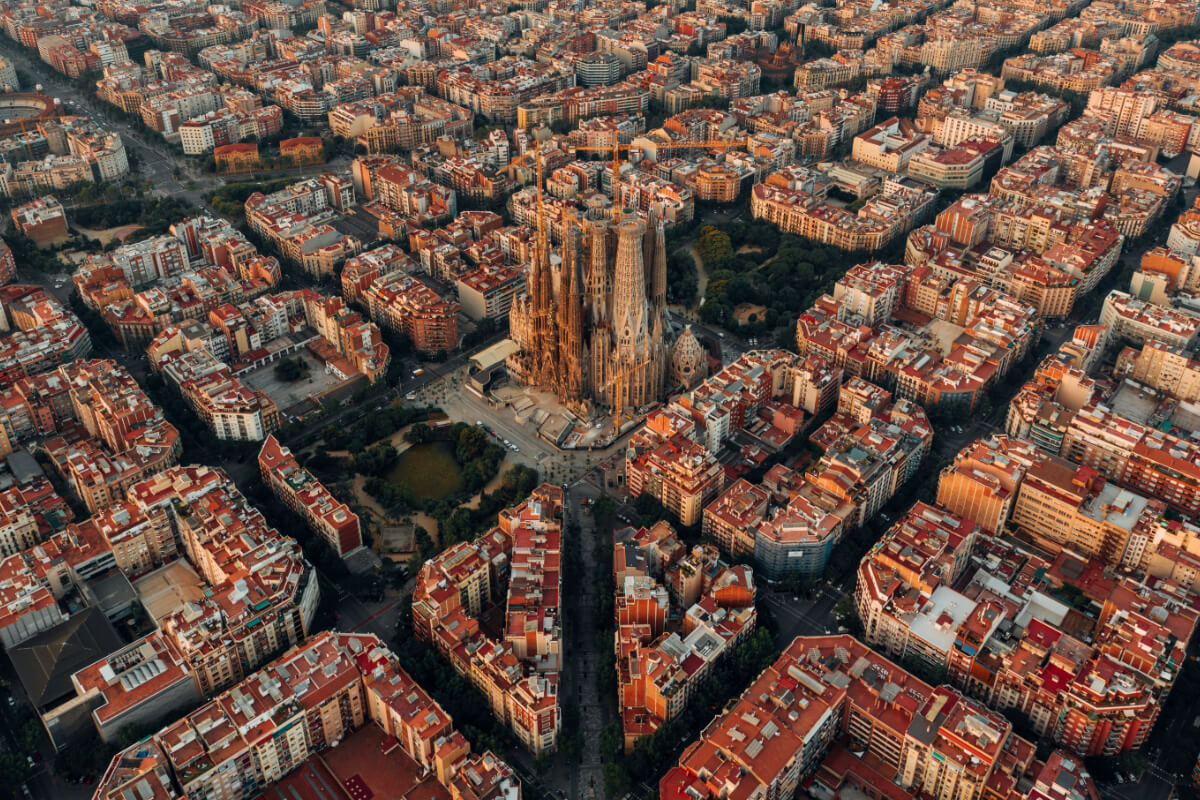
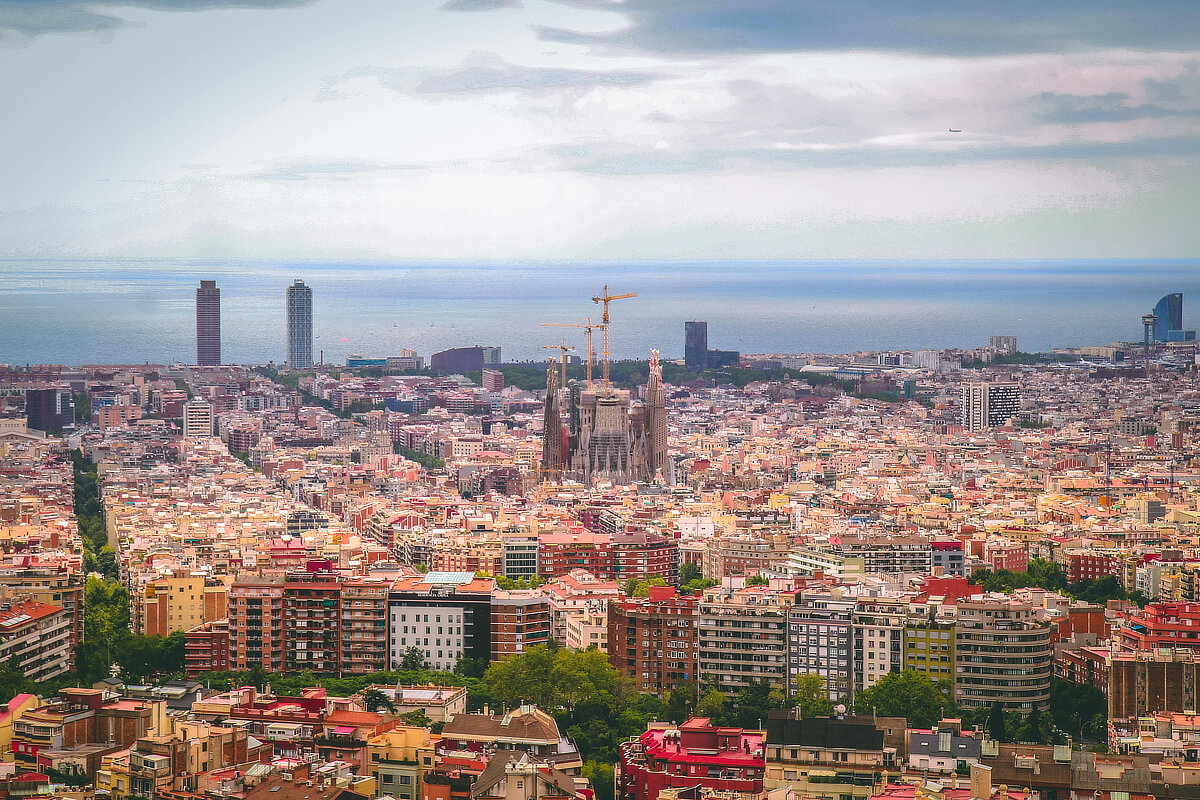
Aerial view of Barcelona, with the Eixample and the Sagrada Família prominently in view, © Logan Armstrong – Unsplash
A Year to Celebrate Gaudí and Cerdà: From Historical Heritage to the City of Tomorrow
2026 will also be a year of historical commemorations. It marks both the centenary of the death of Antoni Gaudí, the foremost exponent of Catalan Modernism, and the 150th anniversary of the passing of Ildefons Cerdà, whose Eixample Plan radically transformed urban planning in his time. Both redefined the way we understand the relationship between architecture and the city, between built space and urban experience, and their legacy will continue to be present in every corner of the city throughout the year.
The Gaudí Year aims to promote the work of the most universal Catalan architect from an academic and scientific perspective, showcasing his technical, urban, and architectural legacy internationally. Highlights include the 100th anniversary of Park Güell as a public park and the completion of the Sagrada Família’s Tower of Jesus, which will reach 172.5 meters, further cementing its status as the tallest church in the world. The tower’s inauguration, scheduled for June 10, will mark the temple’s entry into its final phase, a historic moment of global significance.
The Cerdà Year highlights the figure and legacy of the Catalan engineer, especially his Eixample Plan, on whose grid much of present-day Barcelona is built. His vision of urban planning—based on hygiene, mobility, light, ventilation, and green spaces rather than purely economic interests—continues to inspire contemporary projects such as superblocks and green corridors, which aim for a more livable, sustainable, and resilient city. Today, sustainability and urban quality of life once again bring to the forefront many of the ideas Cerdà championed in the 19th century.
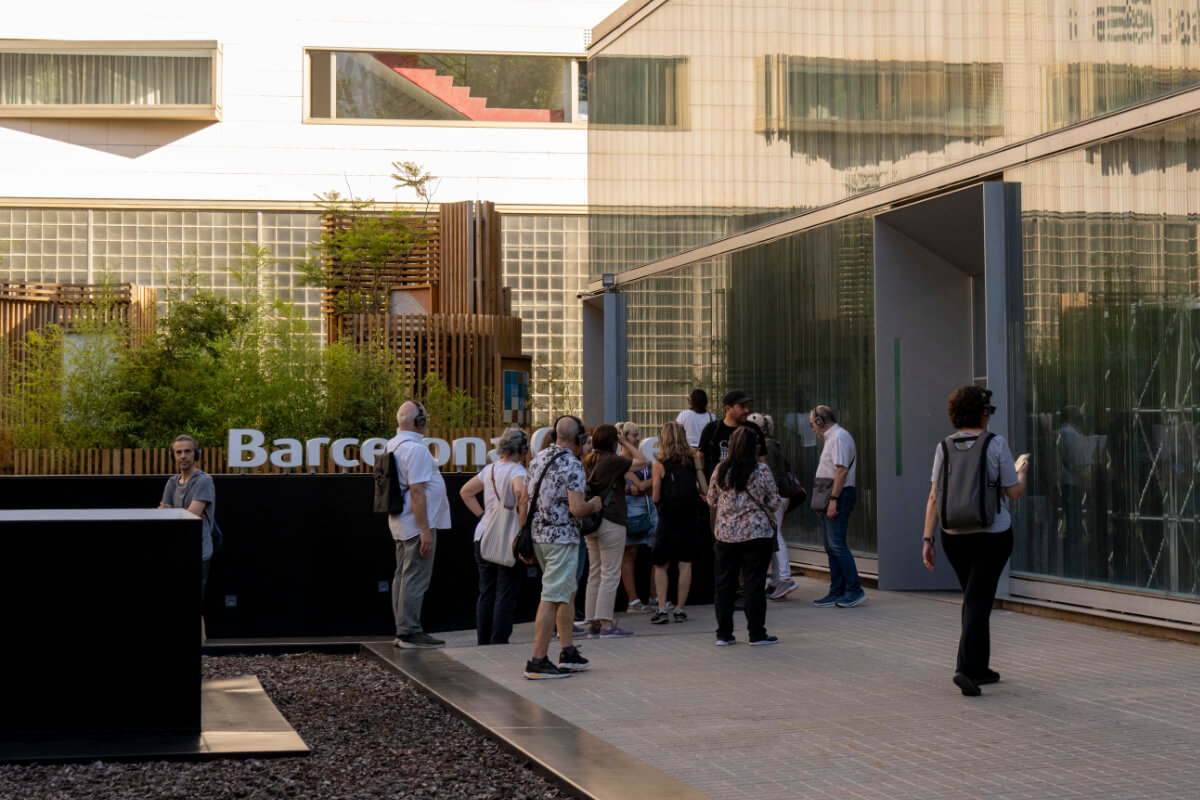
FAD Awards: guided tour of selected projects with Guiding Architects Barcelona, © Clara Antón
Guiding Architects Barcelona: Five Narratives to (Re)discover the City in 2026
Barcelona is best discovered by walking, observing, and allowing yourself to be surprised by how history remains alive in every corner. Our public program of activities for the World Capital of Architecture is based on this idea: five thematic cycles that invite you to (re)discover the city, its architecture, and its public spaces, exploring the dialogue between past and present.
In March, ‘Past Presents: Rationalist Architecture’ kicks off, inviting participants to (re)visit iconic works such as Sert’s Anti-Tuberculosis Dispensary or Mies van der Rohe’s German Pavilion, which forever transformed the way we understand space.
With spring comes ‘Renaturalization of Public Space,’ exploring Sant Martí and the Besòs River, showcasing an urbanism that seeks to reconcile the city with nature, restore ecosystems, and soften the urban pace.
In July, libraries take center stage, becoming not just repositories of knowledge, but also hubs of gathering, coexistence, and cultural life. Spaces like the Gabriel García Márquez Library show how architecture can become a driver of community.
Autumn opens the cycle ‘Industrial Heritage and Sustainability,’ exploring factories converted into hybrid spaces such as Can Batlló and Fabra i Coats, examples of how the city transforms its industrial memory into new forms of creation, participation, and sustainability.
The program culminates with a focus on the FAD Awards for Architecture and Interior Design, allowing visitors throughout the year to explore awarded projects and understand how each engages with the inherited urban fabric.
Each itinerary combines reflection with direct experience: it’s not just about learning about architecture, but about feeling the city, discovering its tensions and ambitions, and understanding how Barcelona is built —both physically and symbolically— at every step. Some cycles are complemented by a debate that delves deeper into the topic and encourages reflection on the city and its built environment.
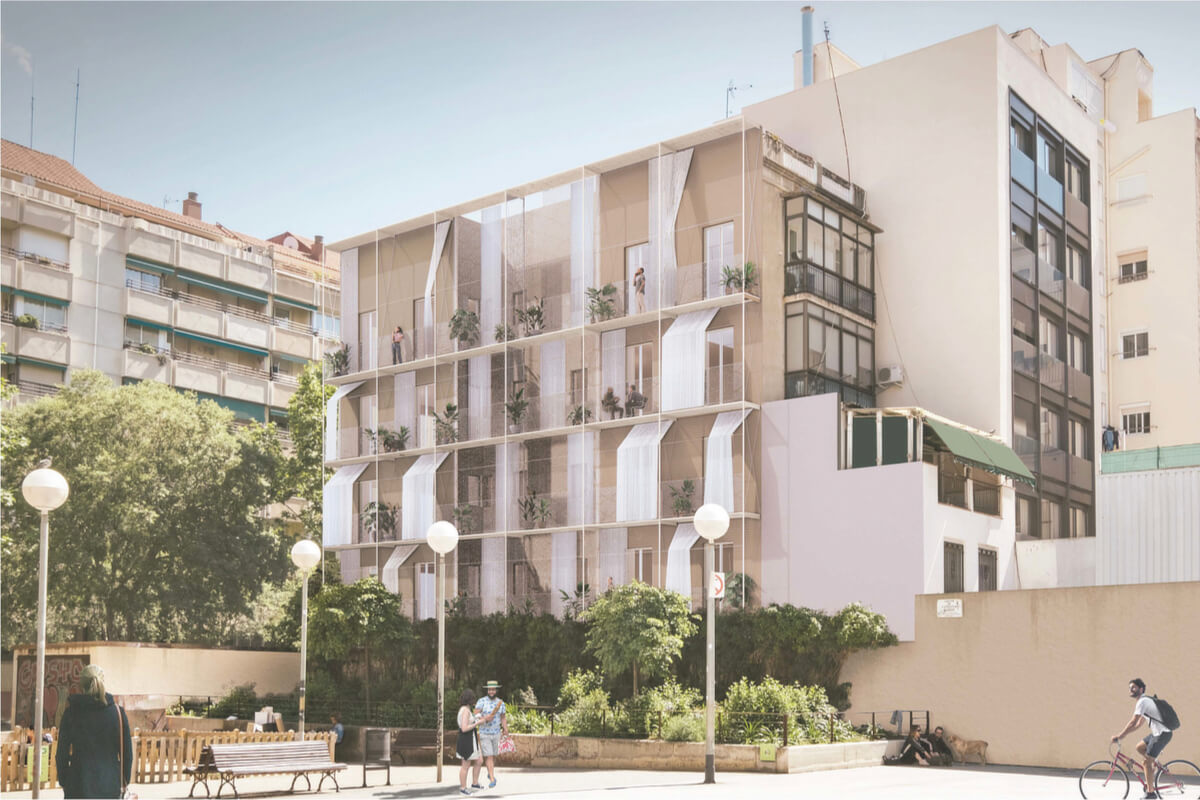
“Eixamplant”, © Oscar Segovia Castillo, Alan Ferrando Shearer e Iván Lozano Benéitez
Ten Party Walls and a Model: Small Interventions That Leave a Mark
The World Capital of Architecture will also feature small-scale interventions that reflect the city’s creativity and commitment to its inhabitants. Two projects will leave a tangible mark: a large model of the city and the transformation of ten party walls into new urban façades.
The 11 by 9-meter model will be installed in the former headquarters of the Gustavo Gili Publishing House and will become a space for shared reflection, to contemplate the past, understand the present, and imagine the future of Barcelona.
At the same time, the City Council, together with the Fundació Mies van der Rohe, is promoting an international competition for young architects to transform ten party walls —one per district— into new urban façades, improving the habitability and sustainability of buildings, enriching the urban landscape, and strengthening social cohesion.
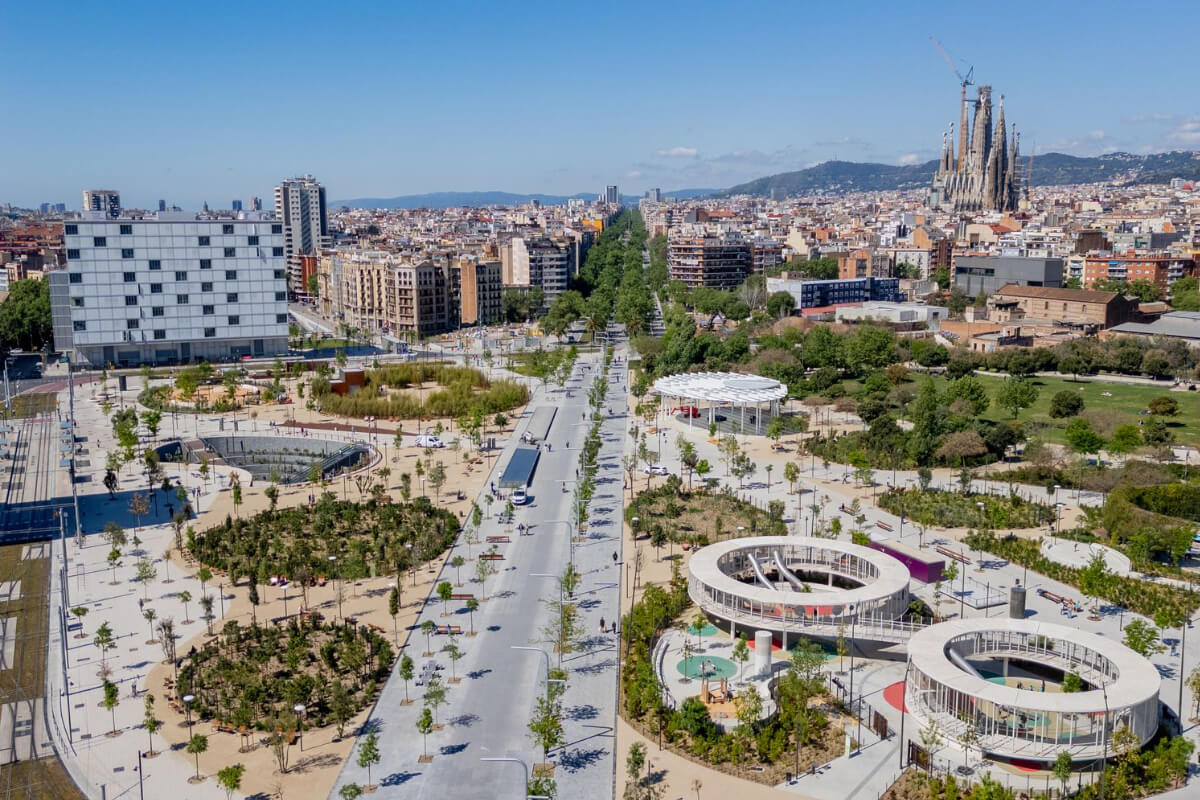
The redesigned Plaça de les Glòries, © DRONEIT – Ajuntament de Barcelona
Barcelona 2026: Come Experience the City with Us
From the universal exhibitions of 1888 and 1929 to the 1992 Olympics, and as host of the UIA World Congress of Architecture in 1996, Barcelona has consistently seized every opportunity to rethink and evolve. With the World Capital of Architecture 2026, the city opens itself to the world with a fundamental question: how can we build resilient, sustainable, and equitable cities that promote livability, social cohesion, and responsible urban development?
At Guiding Architects Barcelona, we invite you to (re)discover the city in its most architectural year and to explore how its urban projects, past and present, seek to respond to contemporary challenges. Discover how we can create your personalized experience together for Barcelona 2026, World Capital of Architecture, connecting great historical masters —such as Gaudí and Cerdà— with the most innovative architectural and urban projects of contemporary Barcelona. Whether it’s your first visit or a return trip, it will be the perfect time to experience the city from a new perspective.
We look forward to seeing you!
Text: Stefanie Herr
Barcelona, World Capital of Architecture 2026
An Invitation to (Re)Discover the City and Its Architecture as the Main Protagonist
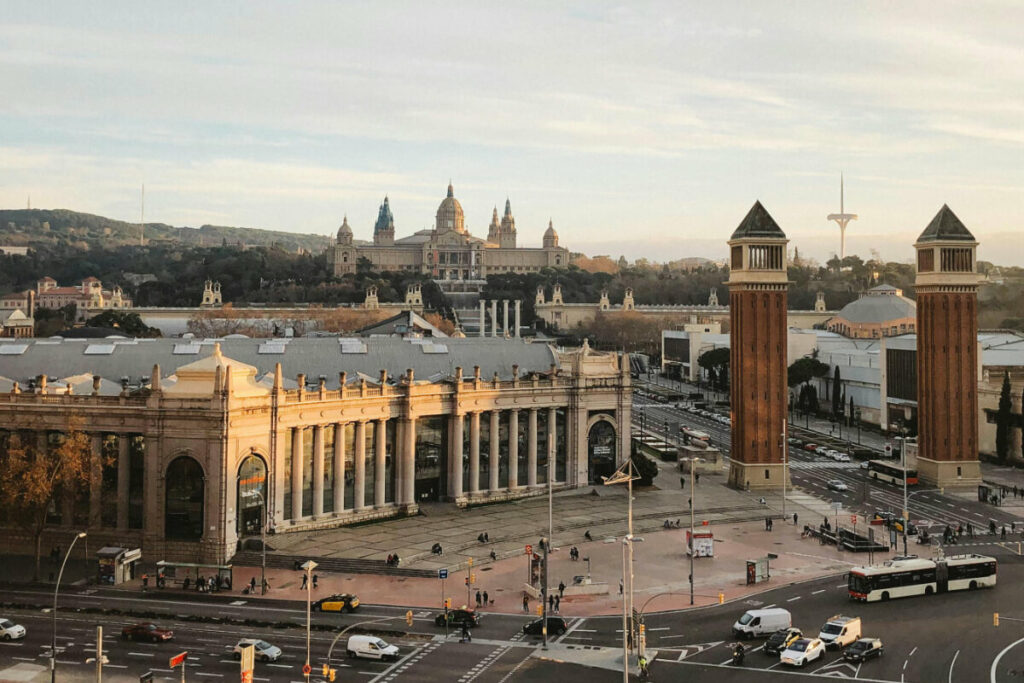
The redesigned Plaça de les Glòries, © GA Barcelona
In 2026, Barcelona positions itself as a global reference for architectural thought. The city not only invites us to admire its legacy, but also to reflect on how architecture, urban planning, and landscape design can confront the great urban, social, and environmental challenges of our time. UNESCO and the International Union of Architects (UIA) have named it World Capital of Architecture, recognizing both its history and its ability to reinvent itself without losing its identity.
This year also commemorates two historic milestones: the centenary of the death of Antoni Gaudí and the 150th anniversary of the passing of Ildefons Cerdà, whose Eixample Plan transformed the city and laid the foundations of modern urban planning.
From February 12 to December 13, Barcelona will become an open urban laboratory, with more than 1,500 activities that will transform streets, squares, and buildings into spaces for dialogue and exchange. Exhibitions, urban tours, workshops, and conferences will allow people to experience architecture firsthand, discovering how every corner of the city engages in a dialogue with its history and today’s challenges.
At Guiding Architects Barcelona, we will actively participate with debates and guided tours designed to connect historical Barcelona with its contemporary concerns. We will explore everything from the landmarks of Catalan rationalism to the renaturalization of public spaces, examining the sustainable transformation of industrial heritage, the role of libraries as community hubs, and the impact of the FAD Awards on contemporary urban life.
For visitors from abroad, being the World Capital of Architecture makes Barcelona the perfect opportunity to (re)discover a city that balances historical legacy, urban innovation, and an ecological vision for the future.
Les Tres Xemeneies of Sant Adrià de Besòs, © Manifesta 15 Barcelona Metropolitana – Arnau Rovira
“Becoming. Architectures for a Planet in Transition” – UIA World Congress of Architecture 2026
One of the most anticipated events will be the UIA World Congress of Architecture, which will bring together architects and urban planners from around the world from June 28 to July 2 under the theme ‘Becoming. Architectures for a Planet in Transition.’ Around 10,000 professionals are expected to gather at two iconic venues: Les Tres Xemeneies of Sant Adrià de Besòs, a symbol of the post-industrial era, and the Disseny Hub Barcelona, in the renewed Plaça de les Glòries that Cerdà had envisioned as the city’s nerve center.
This duality reflects the spirit of the congress: uniting past and future, promoting environmental regeneration, and exploring new forms of coexistence. With this edition, Barcelona becomes the only city to host the UIA Congress twice, following the successful 1996 event, consolidating its role as a global reference for how we want to inhabit the planet.
Aerial view of Barcelona, with the Eixample and the Sagrada Família prominently in view, © Logan Armstrong – Unsplash
A Year to Celebrate Gaudí and Cerdà: From Historical Heritage to the City of Tomorrow
2026 will also be a year of historical commemorations. It marks both the centenary of the death of Antoni Gaudí, the foremost exponent of Catalan Modernism, and the 150th anniversary of the passing of Ildefons Cerdà, whose Eixample Plan radically transformed urban planning in his time. Both redefined the way we understand the relationship between architecture and the city, between built space and urban experience, and their legacy will continue to be present in every corner of the city throughout the year.
The Gaudí Year aims to promote the work of the most universal Catalan architect from an academic and scientific perspective, showcasing his technical, urban, and architectural legacy internationally. Highlights include the 100th anniversary of Park Güell as a public park and the completion of the Sagrada Família’s Tower of Jesus, which will reach 172.5 meters, further cementing its status as the tallest church in the world. The tower’s inauguration, scheduled for June 10, will mark the temple’s entry into its final phase, a historic moment of global significance.
The Cerdà Year highlights the figure and legacy of the Catalan engineer, especially his Eixample Plan, on whose grid much of present-day Barcelona is built. His vision of urban planning—based on hygiene, mobility, light, ventilation, and green spaces rather than purely economic interests—continues to inspire contemporary projects such as superblocks and green corridors, which aim for a more livable, sustainable, and resilient city. Today, sustainability and urban quality of life once again bring to the forefront many of the ideas Cerdà championed in the 19th century.
FAD Awards: guided tour of selected projects with Guiding Architects Barcelona, © Clara Antón
Guiding Architects Barcelona: Five Narratives to (Re)discover the City in 2026
Barcelona is best discovered by walking, observing, and allowing yourself to be surprised by how history remains alive in every corner. Our public program of activities for the World Capital of Architecture is based on this idea: five thematic cycles that invite you to (re)discover the city, its architecture, and its public spaces, exploring the dialogue between past and present.
In March, ‘Past Presents: Rationalist Architecture’ kicks off, inviting participants to (re)visit iconic works such as Sert’s Anti-Tuberculosis Dispensary or Mies van der Rohe’s German Pavilion, which forever transformed the way we understand space.
With spring comes ‘Renaturalization of Public Space,’ exploring Sant Martí and the Besòs River, showcasing an urbanism that seeks to reconcile the city with nature, restore ecosystems, and soften the urban pace.
In July, libraries take center stage, becoming not just repositories of knowledge, but also hubs of gathering, coexistence, and cultural life. Spaces like the Gabriel García Márquez Library show how architecture can become a driver of community.
Autumn opens the cycle ‘Industrial Heritage and Sustainability,’ exploring factories converted into hybrid spaces such as Can Batlló and Fabra i Coats, examples of how the city transforms its industrial memory into new forms of creation, participation, and sustainability.
The program culminates with a focus on the FAD Awards for Architecture and Interior Design, allowing visitors throughout the year to explore awarded projects and understand how each engages with the inherited urban fabric.
Each itinerary combines reflection with direct experience: it’s not just about learning about architecture, but about feeling the city, discovering its tensions and ambitions, and understanding how Barcelona is built —both physically and symbolically— at every step. Some cycles are complemented by a debate that delves deeper into the topic and encourages reflection on the city and its built environment.
“Eixamplant”, © Oscar Segovia Castillo, Alan Ferrando Shearer e Iván Lozano Benéitez
Ten Party Walls and a Model: Small Interventions That Leave a Mark
The World Capital of Architecture will also feature small-scale interventions that reflect the city’s creativity and commitment to its inhabitants. Two projects will leave a tangible mark: a large model of the city and the transformation of ten party walls into new urban façades.
The 11 by 9-meter model will be installed in the former headquarters of the Gustavo Gili Publishing House and will become a space for shared reflection, to contemplate the past, understand the present, and imagine the future of Barcelona.
At the same time, the City Council, together with the Fundació Mies van der Rohe, is promoting an international competition for young architects to transform ten party walls —one per district— into new urban façades, improving the habitability and sustainability of buildings, enriching the urban landscape, and strengthening social cohesion.
The redesigned Plaça de les Glòries, © DRONEIT – Ajuntament de Barcelona
Barcelona 2026: Come Experience the City with Us
From the universal exhibitions of 1888 and 1929 to the 1992 Olympics, and as host of the UIA World Congress of Architecture in 1996, Barcelona has consistently seized every opportunity to rethink and evolve. With the World Capital of Architecture 2026, the city opens itself to the world with a fundamental question: how can we build resilient, sustainable, and equitable cities that promote livability, social cohesion, and responsible urban development?
At Guiding Architects Barcelona, we invite you to (re)discover the city in its most architectural year and to explore how its urban projects, past and present, seek to respond to contemporary challenges. Discover how we can create your personalized experience together for Barcelona 2026, World Capital of Architecture, connecting great historical masters —such as Gaudí and Cerdà— with the most innovative architectural and urban projects of contemporary Barcelona. Whether it’s your first visit or a return trip, it will be the perfect time to experience the city from a new perspective.
We look forward to seeing you!
Text: Stefanie Herr
Related Posts
16.02.2026
Barcelona, World Capital of Architecture, Kicks off a Unique Year – And We Invite You to Experience the City With Us.
19.01.2026
Exhibitions, Academic Events, Projections and Concerts Will Fill Barcelona to Commemorate the Centenary of Antoni Gaudí’s Death.
17.11.2025
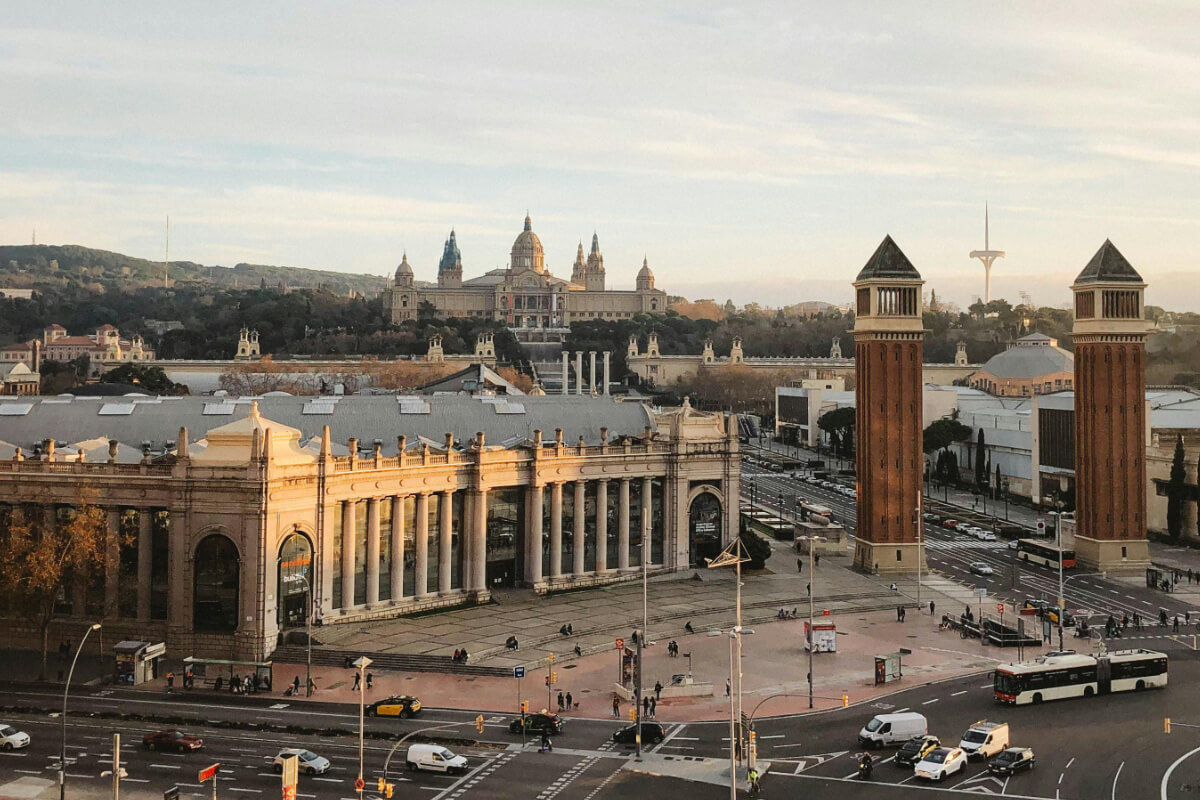
Barcelona’s Historic Promontory Reinvents Itself as the Fira Gears up for the 1929 International Exhibition’s Centenary.
3.11.2025
A Way to Read, De-Code and Understand What the Buildings and Landscape of Barcelona Are Saying.